


Log Calculator (Logarithm)
Log Calculator (Logarithm)
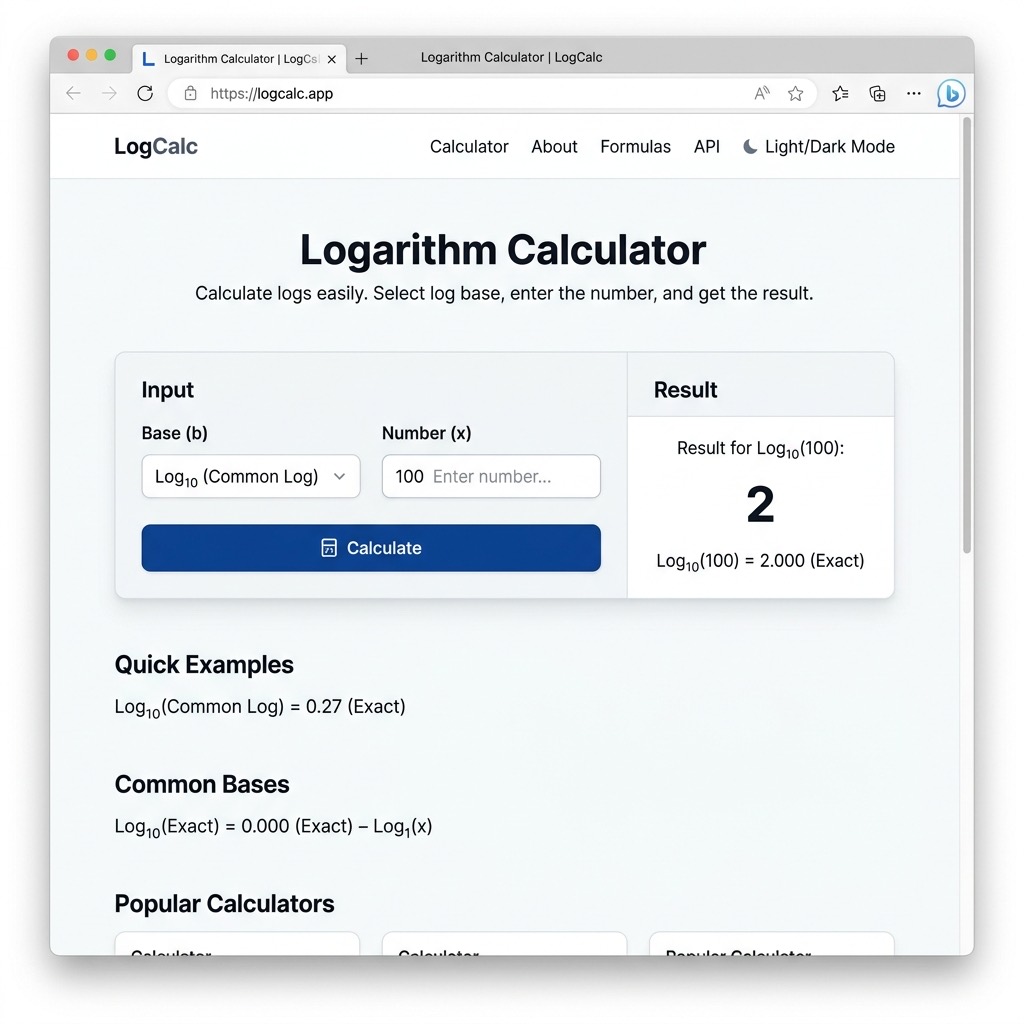
The Log Calculator helps you solve logarithmic expressions of the form logb(x) = y. You can enter any two known values (base, number, or result) to calculate the third instantly. It also supports natural logarithm using base e.
What is Logarithm?
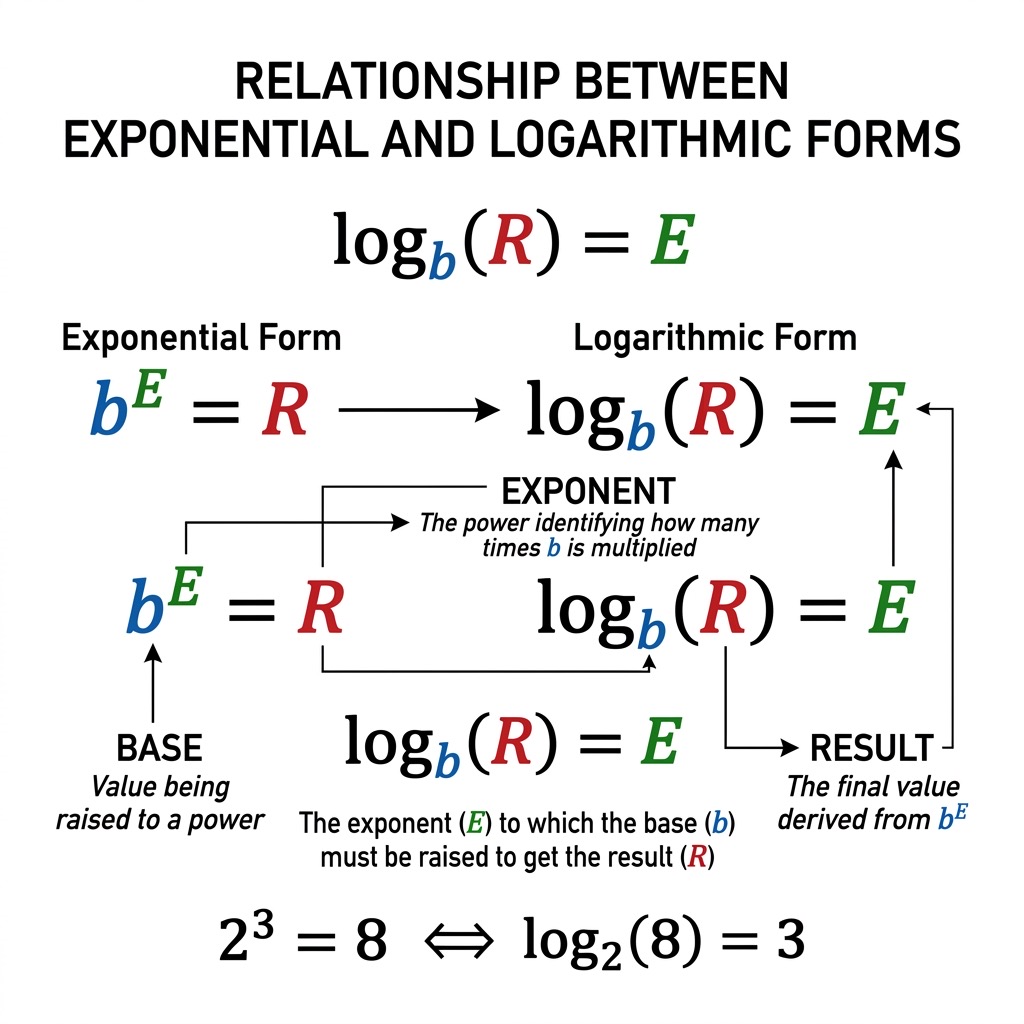
A logarithm is the inverse operation of exponentiation. It tells us how many times a base number must be multiplied by itself to get a specific value.
Mathematically: x = by is equivalent to logb(x) = y
Types of Logarithms
- Common Log (log10): Base 10 logarithm used in science and engineering
- Natural Log (ln): Base e logarithm used in mathematics and physics
- Binary Log (log2): Used in computer science and data structures

Basic Log Rules
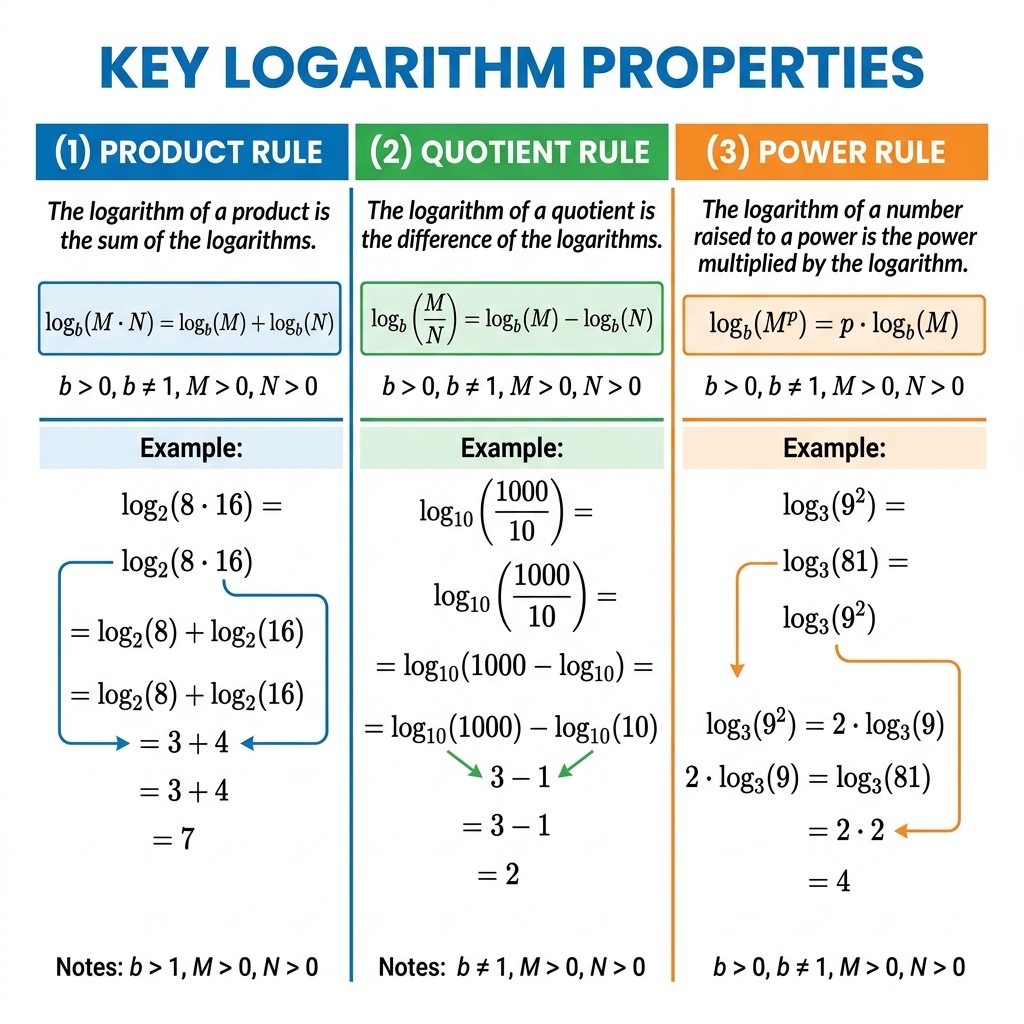
- Product Rule: logb(xy) = logbx + logby
- Quotient Rule: logb(x/y) = logbx − logby
- Power Rule: logb(xy) = y × logbx

Change of Base Formula
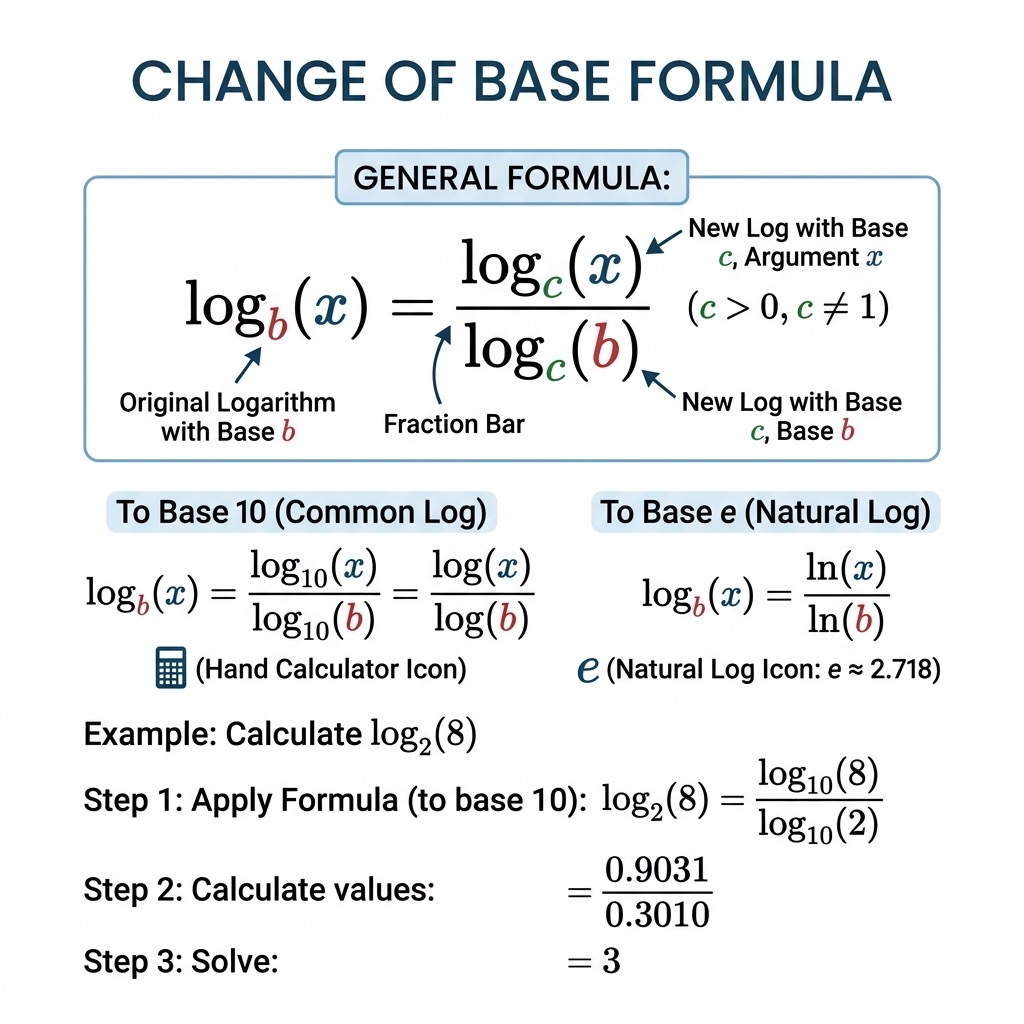
The logarithm base can be changed using the following formula:
logb(x) = logk(x) / logk(b)
Important Log Properties
- logb(1) = 0
- logb(b) = 1
- logb(0) is undefined
- ln(ex) = x
Applications of Log Calculator
- Scientific calculations in physics and chemistry
- Engineering and signal processing
- Computer science algorithms and complexity analysis
- Financial growth and decay models

FAQs
What is a logarithm?
A logarithm is the inverse of exponentiation used to find the power to which a base must be raised.
What is ln?
ln is the natural logarithm with base e (approximately 2.718).
Why do we use logarithms?
They simplify complex multiplication into addition and are widely used in science and computing.
Can log be negative?
Log values can be negative depending on the input number and base.
References
Related Tools