


IT Ratio Calculator
Enter Immature & Total Neutrophil Count and get your IT Ratio.
This calculator will calculate the IT ratio with immature and total neutrophils being entered.
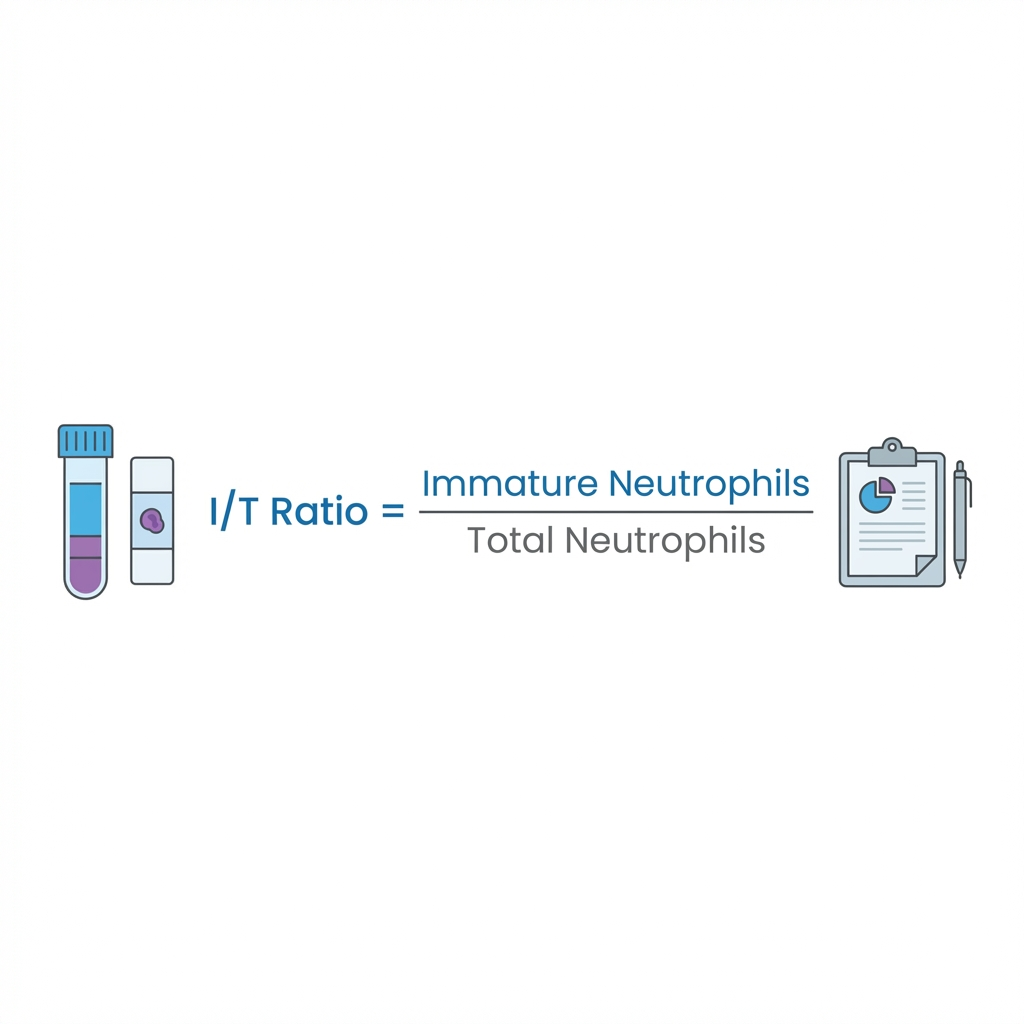
IT Ratio Formula:
IT Ratio Calculator
Our I/T ratio calculator uses the following formula to determine the ratio of immature to total neutrophils:
IT Ratio = IN / TN
How To Calculate IT Ratio?
If the immature neutrophil count (IN) is 452 and the total neutrophil count (TN) is 412, then the IT Ratio can be calculated as follows:
Solution:
Using the formula:
IT Ratio = IN / TN
Substitute the values:
IT Ratio = 452 / 412
Perform the calculation:
IT Ratio ≈ 1.097
Thus, the I/T ratio is approximately 1.097.
To verify the results, you may enter the given values in the IT ratio calculator and check its outcome.
Working of Our Calculator:
Let us guide you on how you can use this I to T ratio calculator!
Input:
- Enter the Immature and Total Neutrophil count in their respective fields
- Tap Calculate
Output:
- IT Ratio
-
Clinical Significance of IT Ratio
- The IT ratio is an important hematology marker used to help detect infections, especially in newborns and critically ill patients. A higher-than-normal ratio may indicate bacterial infection or increased bone marrow response.
- This calculation should always be interpreted alongside other laboratory findings and clinical symptoms. The neutrophil ratio calculator provides a quick estimate, but medical decisions should be made by a qualified healthcare professional.
FAQs:
What Is a Normal IT Ratio In Newborns?
The normal IT ratio in newborns within the first 24 hours is expected to be 0.16 at its maximum. However, this value is reduced to 0.12 during the first 60 hours of the birth.
What Is a Normal IT Ratio?
The acceptable IT ratio is 0.2. If your IT ratio calculated by this calculator is more than this number, you must consult a doctor at the very moment.
References:
From the source Wikipedia: Absolute neutrophil count, Clinical significance, Ranges